Kyoto & Shiga · Kyoto, Higashiyama
Higashiyama: Kiyomizu-dera in the morning, the Sannenzaka lanes, and Gion in the evening
The most photographed day in Kyoto, in an order that beats the crowds: the temple on stilts when it opens at 06:00, the sloping lanes before the shops, and in the evening the geisha district as the lanterns come on.
One day on the slope of Higashiyama, in an order that stays ahead of the crowds. You start at Kiyomizu-dera as it opens, walk down the lanes of Sannenzaka and Ninenzaka before the shops open, pass through Kodai-ji and Yasaka Shrine and eat lunch in Gion. In the afternoon there is a long break, because the evening belongs to Gion: Hanamikoji as the lanterns come on, and a show at Gion Corner. The whole day is on foot, about 5 km, most of it downhill from the mountain to the district. You do not need a day pass: at most two bus rides, ¥230 each.
This day is part of: The Golden Route in a week: Tokyo, Hakone, Kyoto and Osaka, day by day · Tokyo and Kyoto in 5 days: two in Tokyo, three in Kyoto · Ten days in Japan: Tokyo, Hakone, the Alps, Kyoto and Osaka · Two weeks in Japan: Tokyo, Nikko, Hakone, the Alps, Kyoto, Hiroshima and Osaka
The day on a map
8 stops, in order
- Stops
- 8
- Walking minutes
- 43
- Kiyomizu-dera, then Walk 5 min
- Sannenzaka and Ninenzaka, then Walk 5 min
- Breakfast near Yasaka Pagoda, then Walk 8 min
- Kodai-ji, then Walk 10 min
- Yasaka Shrine and Maruyama Park, then Walk 6 min
- Lunch break in Gion, then Walk 4 min
- Gion, then Walk 5 min
- Gion Corner or kaiseki
The same stops with the same numbers, and the way from stop to stop. On a phone it opens in the app, and that is what you navigate with in Japan. Pin names on the map are in Hebrew.
On Shabbat: Yasaka, Maruyama Park, Sannenzaka, Yasaka Pagoda, Gion and the Shirakawa canal: all free, and 5 to 10 minutes' walk from each other. Kiyomizu-dera and Kodai-ji charge admission, so skip them or look from outside (the slope below the Kiyomizu terrace can be seen from the street too). Sleep in Gion or Higashiyama.
Getting there: From Kyoto Station: city bus 206 or 100 to the Gojo-zaka stop, 15 minutes, ¥230, then a 10-minute walk uphill. On weekdays the first 206 leaves at 05:31 and the next at 06:11. A taxi from the station costs about ¥1,300, and it is worth it at 06:00. If you are staying in Gion, walk up, about 20 minutes from Yasaka Shrine.
Stop 1TempleMust
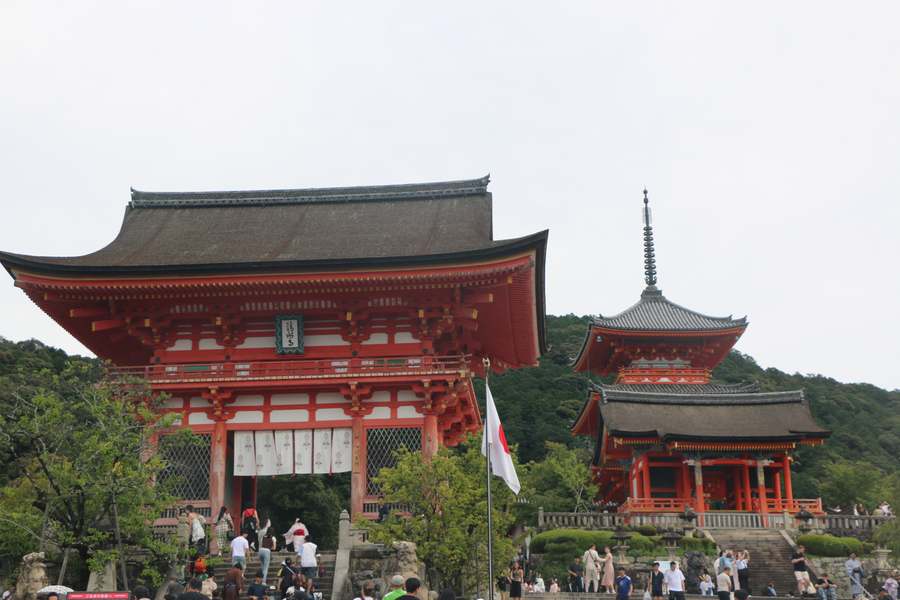
Kiyomizu-dera: the terrace on stilts, before everyone else
You start at the temple on stilts while it is still empty. It opens at 06:00, and at that hour the famous terrace, 13 meters above the slope and without a single nail, is empty. Below, at the Otowa waterfall, you drink from one of three streams: long life, studies or love. Pick one. At 09:00 the buses arrive.
Down to Sannenzaka
Stop 2LanesMust
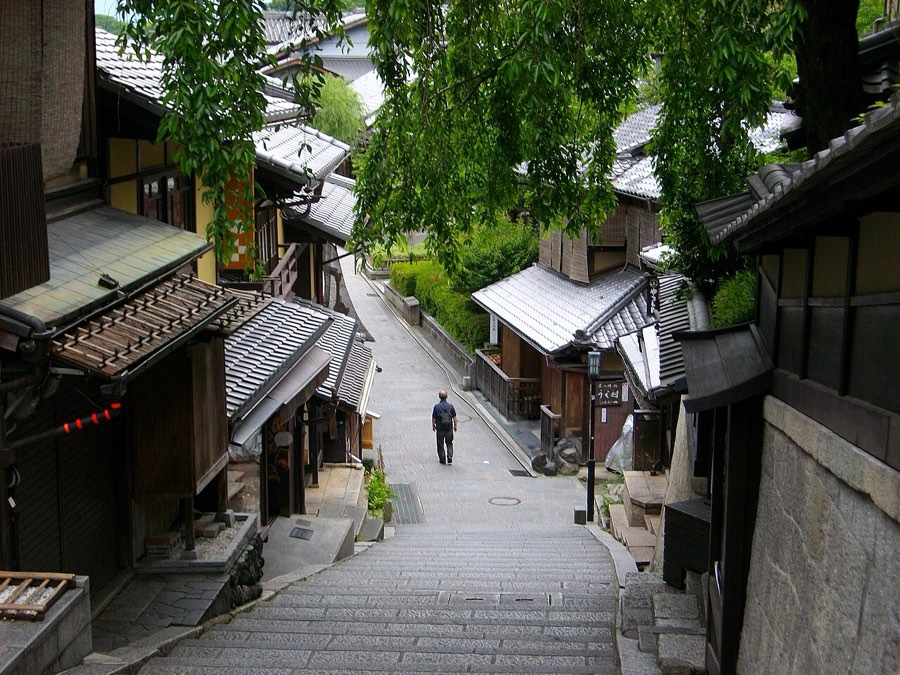
Sannenzaka and Ninenzaka: the sloping lanes while they are empty
Two stone lanes with 19th-century wooden houses, ceramics shops and sweet shops, and at this hour almost no people. According to legend, whoever falls on Sannenzaka will die within three years, so walk down slowly. Yasaka Pagoda at the end of the lane is the photo of Kyoto.
On to breakfast
Stop 3BreakfastRecommended
Breakfast near Yasaka Pagoda
Cafes are opening around the pagoda, and this is also the time to rent a kimono for the day, ¥4,000 to ¥6,000 including hairstyling, in the shops around it. Eat whatever you feel like, a full Japanese breakfast, coffee or something sweet:
Up to Kodai-ji
Stop 4Temple and gardenRecommended
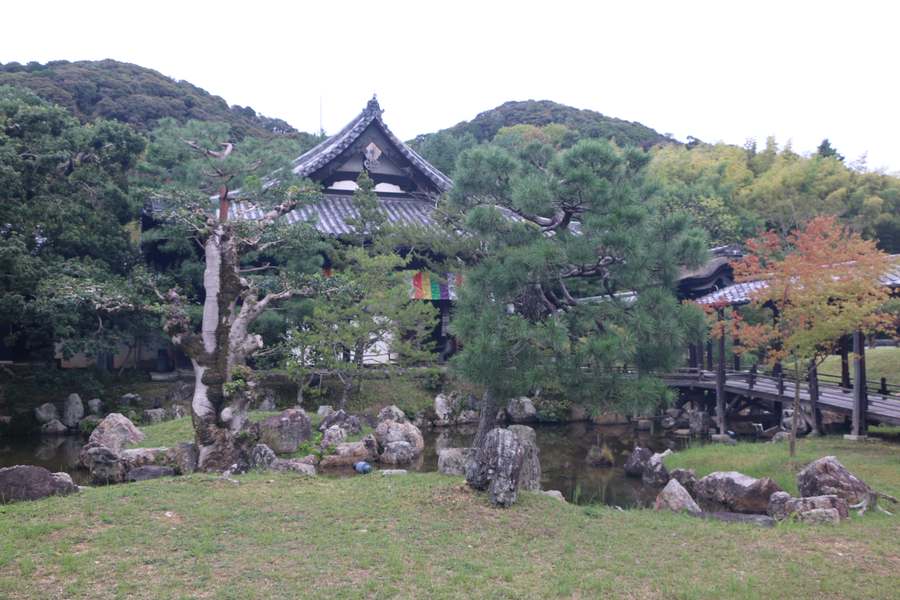
Kodai-ji: garden, bamboo and Rikyu's tea house
The temple that the widow of Toyotomi Hideyoshi built in 1606. A sand and stone garden, a small bamboo grove, empty unlike the one in Arashiyama, and two tea houses that, according to tradition, Sen no Rikyu designed. Entry is ¥800, and with Entoku-in ¥1,200. In spring and in the autumn foliage season there is night illumination.
On to Yasaka Shrine
On the way you can stop at:
- Nene-no-michi: A stone-paved path, about 460 meters long, named after Nene, Hideyoshi's wife. When it was laid out in 1998, its power lines were buried underground.
Stop 5Shrine and parkMust
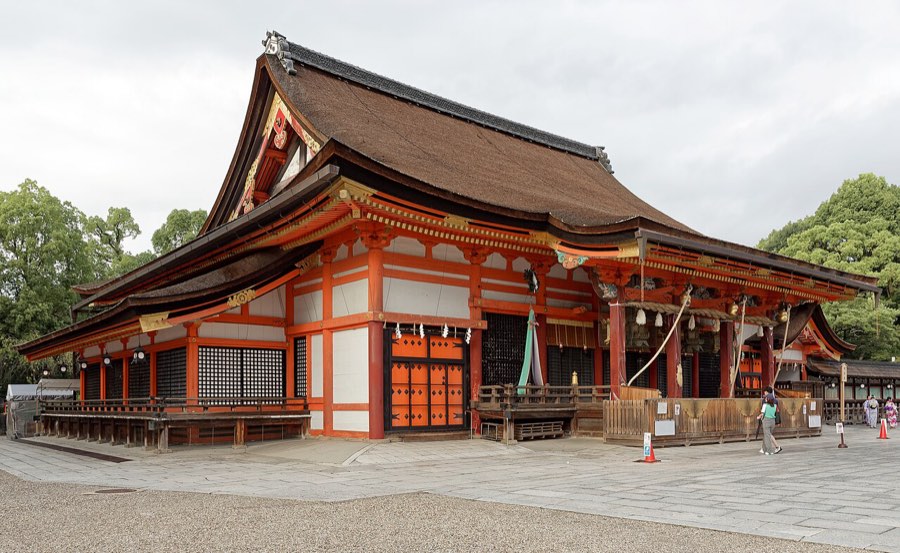
Yasaka Shrine and Maruyama Park
Gion's Shinto shrine, always open and free to enter. Its paper lanterns light up in the evening. Behind it is Maruyama Park, with the famous weeping cherry tree. In July the Gion Matsuri festival sets out from here.
Down to Gion for lunch
On the way you can stop at:
- Kagizen Yoshifusa: A long-established Japanese confectioner on Shijo Street. In the tea room at the back of the shop they serve kuzukiri, clear, cold noodles made from kuzu starch. Closed on Mondays.
Stop 6LunchRecommended
Lunch break in Gion
You come down into the district of tea houses. If you are already hungry in Maruyama Park, have yaki-dango and matcha there, a quick, cheap alternative to the two restaurants. And if you sit down to eat:
Break
Back to the hotel before the evening
The day starts at 06:30 and ends at 20:30, and Gion and the show are still waiting in the evening. Here the day is split in two on purpose. If you are staying in Gion or Higashiyama, walk to the hotel. If you are staying in Shijo-Kawaramachi, walk about 12 minutes west along Shijo Street, across the river. If you are staying near Kyoto Station, take city bus 206 from the Gion stop, opposite the shrine, 21 minutes by the timetable, ¥230. The train is not faster: a 10-minute walk to Gion-Shijo, the Keihan Line to Tofukuji and a change to JR, 18 minutes, ¥330. Even if you are staying near Kyoto Station you still get almost an hour and a half at the hotel: you head out again at 16:30, and the walk in Gion starts at 17:00. If you are not going back to the hotel, rest at a tea house: a matcha parfait at Saryo Tsujiri, the tea merchant's tea house, on the 2nd and 3rd floors above the shop on Shijo Street, or coffee at another tea house. If you still want to keep going: the huge Chion-in temple, next to the park, ¥500.
Into Gion
Stop 7DistrictMust
Gion: Hanamikoji and the Shirakawa canal as the lanterns come on
Hanamikoji Street, with the geisha tea houses (ochaya), and the Shirakawa canal, with willows and stone bridges. Between 17:30 and 18:00 maiko walk to work. Do not stop them, do not photograph them up close and do not enter the private lanes; there is a fine for it. The house with the red lantern is Ichiriki, the tea house that appears in the play about the 47 ronin.
On to Gion Corner
Stop 8Culture and eveningRecommended
Gion Corner or kaiseki: a condensed Japanese evening
You finish with a one-hour show of 7 arts: tea ceremony, maiko dance, bunraku and kyogen. It is touristy, and it suits anyone who will not see a geisha at another show. ¥5,500, two shows an evening. Instead you can have a kaiseki dinner, 10 seasonal courses, from ¥8,000 at a restaurant in Gion, booked ahead. From here you head back: Keihan's Gion-Shijo Station is about 6 minutes on foot, and Hankyu's Kyoto-Kawaramachi about 10 minutes.
Want to build your own trip, day by day?
JourneySketch is a trip planner we built: a plan for each day, flights, hotels and a packing list, all in one place. No signup needed.
More in the same area
Full day · Kyoto, Arashiyama
Arashiyama: the bamboo grove at sunrise, Tenryu-ji, monkeys and the Romantic Train
Full day · Kyoto, North and Center
Kinkaku-ji, Ryoan-ji, Nijo Castle and Nishiki Market: the north and the center
Full day · Kyoto, northern Higashiyama
Ginkaku-ji, the Philosopher's Path and Nanzen-ji: northern Higashiyama on foot
Full day · Kyoto, the northern mountains
Kurama and Kibune: a walk on the tengu's mountain, the water shrine, and a meal above the stream
Full day · Kyoto, around the station
Kids' day in Kyoto: the Railway Museum, the Aquarium, To-ji and Kyoto Tower
Walks and hikes · Kyoto, Higashiyama
Walking Kyoto's eastern hills: from Ginkaku-ji to Gion via the Philosopher's Path
Written as a draft and verified by hand against official sources. Opening hours and prices change, so check before you go.